Daphné Hamilton-Jones visits the Playful Living Lab
The Playful Living Lab at the ERAM University Centre for the Arts welcomes Daphné Hamilton-Jones, within the framework of the ERASMUS+ INNPACT! project , a doctoral researcher at the Cresson laboratory of the Grenoble National School of Architecture (ENSAG), France, throughout November. During her stay, she will share her research with the ERAM community through a talk and a workshop open to students, teaching and research staff, and administrative and services staff.
Hamilton-Jones’s research explores how design can contribute to addressing complex challenges related to the climate emergency and food security, with a particular focus on the role of communities and collective spaces in transforming food systems.
The first activity will take place on 4 November, from 3 to 4 pm, with the talk Designing spaces for food system change: when communities join to face environmental urgency. During this session, the researcher will explore the concept of food third places: community spaces that promote alternative food production and consumption practices, ranging from small-scale agriculture to collective participation in food processes. The talk will reflect on how these initiatives can help transform our relationship with food and address current environmental challenges.
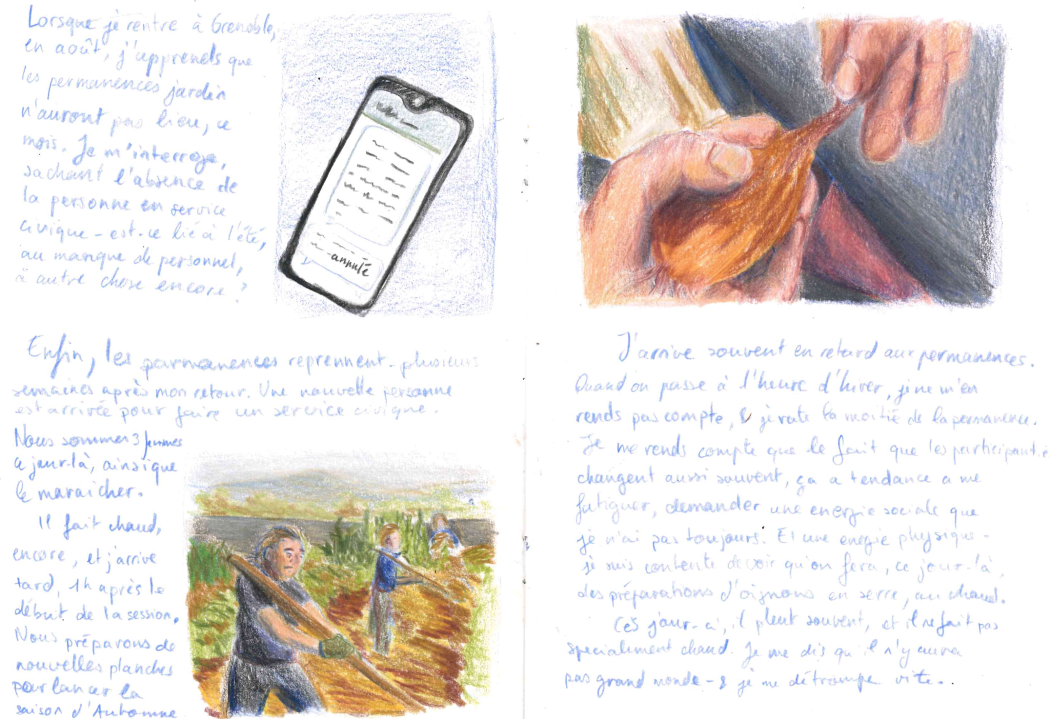
The second activity will be a practical workshop, Sketching is thinking: sketching as a tool for research, taking place on 18 November, from 3 to 5 pm, also at the Playful Living Lab. The session will explore drawing and sketchbooks as research tools, particularly in the field of social sciences. Through a series of exercises, participants will discover how sketching can help them observe, think and approach research questions from new perspectives. No previous research experience or drawing skills are required — just curiosity and a willingness to explore.
Both activities are open.
Activity carried out within the framework of the ERASMUS+ INNPACT! project. https://info.eram.cat/innpact
INNPACT! aims to foster a culture of collaborative innovation by bringing together local associations, communities, and students. By involving all members of the community, it identifies local challenges and co-creates innovative, sustainable solutions that address real needs.
Co-funded by the European Union. The views and opinions expressed are those of the author(s) only and do not necessarily reflect those of the European Union. The European Union cannot be held responsible for them.